9 Best Robotic Pool Cleaners Under $500 (October 2026)
The best robotic pool cleaners under 500 dollars include the WYBOT C1 for app-guided pool coverage, the Aiper Scuba S1 for extended Eco cleaning, and the Beatbot Sora 10 for large debris loads.
On this page (4 sections)
The best robotic pool cleaners under 500 dollars in this roundup cover a range of needs, from broad area cleaning to longer cycles and simpler retrieval. The WYBOT C1 is the leading all-around fit based on its four-area coverage and app scheduling, while the Aiper Scuba S1 and Beatbot Sora 10 stand out for their stated runtimes.
Prices can shift, so check the current price before ordering.
Our picks at a glance
-
1

-
2

-
3

- 4
 Best for lightweight handlingCheck it
- 5
 Best for edge-focused brushingCheck it
- 6
 Best for simple plug-and-play useCheck it
- 7
 Check it
2026 Release Robotic Pool Vacuum (Wall Climbing)
Best for mixed pool types - 8
 Best for multiple cleaning modesCheck it
- 9
 Check it
KKI Cordless Robotic Pool Cleaner
Best for edge retrieval
Which robotic pool cleaners under 500 dollars fit different pools?
The best match depends on your pool size, the areas you want cleaned and how much interaction you want between cycles. A robot that covers walls and waterline may suit a different routine than a simpler floor cleaner.
WYBOT C1: Best for app-guided pool coverage
- Cleans floor, walls, waterline and steps
- Up to 160 minutes per cycle
- App scheduling and cleaning modes
- Pools up to 1,618 sq ft
Four-area cleaning and app scheduling make the C1 a flexible fit for inground pools. Its runtime and stated pool-size limit help you compare it with your pool before buying.
Pros
- Covers four pool areas
- App scheduling and mode controls
- Up to 160 minutes of operation
Cons
- Designed specifically for inground pools
- Charging takes 4 hours
The WYBOT C1 is the top pick for buyers who want a cordless cleaner that covers floor, walls, waterline and steps. It also pairs app scheduling and mode controls with a stated runtime of up to 160 minutes.
WYBOT describes the C1 for inground pools up to 1,618 sq ft and depths up to 9.86 ft. Its navigation uses N-Path and S-Path patterns, which WYBOT says are designed to reduce missed spots and overlapping routes.
The charge time is listed as 4 hours, so plan around that when you set a cleaning routine. Its broad coverage and app features make it the most flexible fit here, provided your pool fits the stated limits.
Choose it for a larger inground pool where you want several areas cleaned in one cycle. If you're weighing the value of a robot against other cleaner types, our guide to whether a robotic pool cleaner is worth it can help with that decision.
Aiper Scuba S1: Best for extended Eco cleaning
- Floor, walls, waterline and shallow areas
- Up to 270 minutes in Eco mode
- Dual filtration with a replaceable 3-micron filter
- App support and weekly scheduling
The Scuba S1 pairs four-area cleaning with a long Eco mode and two filter layers. It suits buyers who value scheduled maintenance and fine-particle filtration.
Pros
- Long Eco mode runtime
- Weekly custom cleaning plan
- Replaceable fine filter
Cons
- Runtime is shorter in other modes
- Shallow-area cleaning is for areas above 12 in
The Aiper Scuba S1 is a strong fit for buyers who value long Eco-mode runtime and fine filtration. Aiper states up to 270 minutes in Eco mode and up to 180 minutes in Auto, Floor, Wall or Scheduled modes.
Its dual filtration pairs a replaceable 3-micron filter with a 180-micron standard filter. The cleaner is designed for floors, walls, waterline and shallow areas above 12 inches, and its app supports a weekly custom schedule.
Runtime depends on the selected mode, so compare the mode you'll actually use instead of relying only on the Eco figure. Aiper also describes a two-year warranty, which is worth checking against the terms for your region.
Choose it if longer scheduled maintenance and two filter layers are priorities. For setup and cycle planning, see our guide on how often to run an automatic pool cleaner.
Beatbot Sora 10: Best for large debris loads
- Up to 300 minutes of cleaning
- 5-liter debris basket
- Floor, walls, waterline and shallow areas
- Parks at the waterline after a cycle
The Sora 10 combines long stated runtime with a large basket for leaves and other debris. Its waterline parking feature keeps the cleaner near the edge for retrieval after a cycle.
Pros
- Up to 300 minutes per cycle
- 5-liter debris basket
- Waterline parking after cleaning
Cons
- Optional 3-micron filtration is separate
- The pool-size claim is up to 3,229 sq ft
The Beatbot Sora 10 suits pools with heavy leaf or debris loads and buyers who want fewer interruptions. Its 5-liter debris basket is the largest stated capacity among these picks, and the cleaner can park at the waterline for retrieval after a cycle.
Beatbot states up to 300 minutes of runtime and coverage for pools up to 3,229 sq ft. It cleans floors, walls, waterline and shallow areas as low as 12 inches, with app control over Wi-Fi or Bluetooth.
The optional 3-micron filter is an extra filtration choice, so account for that if fine dust is a concern. The basket size and long cycle are useful for larger cleaning jobs, but make sure the cleaner's stated pool coverage matches yours.
Choose it for a large pool where leaves fill smaller baskets quickly. Our guide to pool cleaners for heavy leaves compares options for debris-heavy settings.
Gosvor LiteVac G1: Best for lightweight handling
- 15.2 lb weight
- Floor, walls, waterline and shallow areas
- 3.6-liter basket
- App control with 5 cleaning modes
At 15.2 lb, the LiteVac G1 is a lighter option among these picks, with a 3.6-liter top-load basket. Its app offers five modes, though runtime depends on the selected mode and pool conditions.
Pros
- 15.2 lb listed weight
- Top-load basket
- Five cleaning modes
Cons
- Smart, floor and wall modes are stated for up to 150 minutes
- App works only on land
The Gosvor LiteVac G1 is a lighter option for buyers who expect to lift the cleaner in and out of the pool often. It weighs 15.2 lb and has a 3.6-liter top-load basket for routine debris removal.
Gosvor describes it for floors, walls, waterline and shallow areas over 12 inches, with up to 200 minutes in Eco mode. Smart, Floor and Wall modes are stated for up to 150 minutes, and its app works only on land.
The cleaner has five modes and double filtration, including a 3-micron filter. Gosvor notes that runtime can vary with pool conditions and that a clogged basket or filter can affect cleaning, so regular rinsing is part of ownership.
Choose it if a lighter body and top-load basket matter in your routine. Read our guide to how many years a robotic pool cleaner lasts when comparing longer-term ownership needs.
WYBOT B1: Best for edge-focused brushing
- Six-roller brush design
- Floor, wall, waterline and combo modes
- Up to 125 minutes of operation
- App control
The B1's six-roller layout adds side and bottom brushes to its main rollers. Its multiple cleaning modes and app control suit buyers who want to choose a specific area or combine them.
Pros
- Six-roller brush layout
- Several cleaning modes
- Quick Clean mode runs for 1 hour
Cons
- Smaller 1.5-liter basket
- Pool-shape and material settings need configuration in the app
The WYBOT B1 puts extra emphasis on edge cleaning with its six-roller brush layout. Dual main rollers work with side and bottom brushes, while the available modes cover floor, wall, waterline and combo cleaning.
WYBOT states up to 125 minutes per cycle for pools up to 1,220 sq ft, plus a 1-hour Quick Clean mode. The basket capacity is 1.5 liters, smaller than the Sora 10 and LiteVac G1, so heavy debris may mean more frequent emptying.
Before placing it in water, WYBOT says to set the pool shape and material in its app. Bluetooth is the supported connection, and the cleaner must be fully charged before starting a cycle.
Choose it for edge-focused brushing and selectable cleaning modes. For a step-by-step routine, follow our guide on vacuuming a pool with a robotic cleaner.
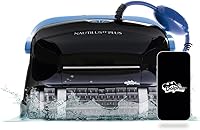
Dolphin Nautilus Pool-Up: Best for simple plug-and-play use
- One-touch operation
- Cleans floors and walls
- Plug-and-play setup
- Two-hour cleaning cycle
The Pool-Up keeps the routine simple: plug it in, place it in the pool and start a cycle. Its stated focus is floor and wall cleaning for small pools.
Pros
- One-touch operation
- Plug-and-play setup
- Active scrubbing brush
Cons
- Uses AC power rather than a cordless battery
- Coverage is stated for pools up to 26 ft
The Dolphin Nautilus Pool-Up is the simplest pick for buyers who prefer plug-and-play operation over cordless charging. Dolphin describes it for small pools, with one-touch automation, an active scrubbing brush and a two-hour cycle.
Its stated cleaning areas are floors and walls, and the unit uses AC power. That makes it a different fit from the battery models above: you'll need to account for its power connection and follow the maker's setup instructions.
The Pool-Up is described for pools up to 26 ft. Check that limit against your pool before buying, especially if you have a longer layout or want waterline and step coverage.
Choose it if you want a straightforward plug-in cleaner for a smaller pool. If you're still comparing cleaner styles, our guide to automatic, suction and pressure cleaners explains the main differences.
2026 Release Robotic Pool Vacuum (Wall Climbing): Best for mixed pool types
- For inground and above-ground pools
- Floor, wall and full-coverage modes
- Up to 190 minutes per cycle
- Cordless operation
This cordless cleaner is described for both inground and above-ground pools, with selectable floor, wall and full-coverage modes. Compare its stated pool area and cycle time with your needs.
Pros
- For inground and above-ground pools
- Three cleaning modes
- Cordless operation
Cons
- Does not include app control in its stated features
- Pool-shape compatibility should be confirmed for your setup
This 2026 release is described for both inground and above-ground pools, with floor, wall and full-coverage modes. Its cordless design and stated runtime of up to 190 minutes may suit buyers who want a longer cycle without a power cable.
The maker describes a maximum pool area of 2,150 sq ft and a 3-hour recharge time. It also states that the cleaner can climb slopes up to 40 degrees and uses sonar navigation.
Its feature set does not specify app control, waterline cleaning or filtration details. If those matter to your decision, compare it with picks that name those features directly and confirm pool compatibility before ordering.
Choose it if your pool type and desired coverage match the stated modes. Our automatic pool cleaner cost guide explains how to think about the overall cost of choosing a cleaner.
TALOSBO C1: Best for multiple cleaning modes
- Seven cleaning modes with app control
- Floor, walls and waterline
- Up to 180 minutes in Eco mode
- Dual-layer filtration
The TALOSBO C1 offers seven app-controlled modes and dual-layer filtration. Its 180-minute figure applies to Eco mode, while full-pool runtime is stated as about 90 to 100 minutes.
Pros
- Seven cleaning modes
- App control
- Dual-layer filtration
Cons
- Full Pool mode runs for about 90 to 100 minutes
- Narrow step surfaces may not be cleaned well
The TALOSBO C1 gives app users seven cleaning modes and dual-layer filtration. It is described for floors, walls and waterline cleaning, with a stated pool-size limit of 1,615 sq ft.
The 180-minute runtime applies to Eco mode; TALOSBO describes Full Pool mode as about 90 to 100 minutes. Its guidance also says that a full basket or clogged filter can affect wall climbing, so empty and clean the filter parts as needed.
TALOSBO says the cleaner can go up steps but may not clean narrow step surfaces well. That makes the stated coverage less useful if narrow steps are a main reason for buying a robot.
Choose it if you want several app-controlled modes and can work within its mode-specific runtime. If a cleaner stops moving, our pool cleaner troubleshooting guide covers common checks.
KKI Cordless Robotic Pool Cleaner: Best for edge retrieval
- Cordless operation
- Self-parks at the pool edge
- Up to 90 minutes of operation
- For inground and above-ground pools
The KKI cleaner parks at the pool edge when its cycle ends or its battery is low, which can make retrieval simpler. Its stated runtime is shorter than several other picks here.
Pros
- Self-parking at the pool edge
- Cordless
- For inground and above-ground pools
Cons
- Runtime is up to 90 minutes
- Detailed cleaning-zone coverage is not stated
The KKI cleaner's main convenience is self-parking at the pool edge when a cycle ends or the battery gets low. That can make retrieval easier if you want to avoid reaching into the pool for the cleaner.
KKI states up to 90 minutes of operation and describes the robot for inground and above-ground pools. Its stated features do not give detailed coverage zones, so confirm whether the cleaner handles the areas you want before choosing it.
The shorter runtime and limited zone information make it a more specialized option than the picks above. Its self-parking feature may still be useful if easy retrieval is the main concern.
Choose it if edge parking is more important to you than a longer cycle.
What should you compare before buying a pool robot?
Compare pool coverage, runtime and debris handling first, because those factors affect how well a cleaner fits your pool and routine. App control and retrieval features matter too, but they cannot make up for a mismatch in pool size or cleaning zones.
A cleaner that handles floor, walls, waterline and shallow areas can reduce the need to switch methods. Check the exact areas each model covers, since “full coverage” can mean different things across brands.
Runtime figures also depend on mode. The Aiper Scuba S1 and Gosvor LiteVac G1 give different runtimes for Eco and other modes, while the Beatbot Sora 10 states up to 300 minutes per cycle.
Basket capacity helps you estimate how often you'll stop to empty debris. The Sora 10 has a 5-liter basket, the LiteVac G1 has a 3.6-liter basket, and the WYBOT B1 has a 1.5-liter basket.
Filtration choices matter if your pool collects fine dust as well as leaves. The Scuba S1 and LiteVac G1 state a 3-micron filter option alongside a standard filter, while Beatbot's 3-micron filter is optional.
Also check charging needs, control method, stated pool size and any limits on surfaces or steps. If you have a vinyl liner, review our robotic pool cleaners for vinyl pools guide and follow the cleaner maker's surface guidance.
Are cordless robotic pool cleaners worth it under 500 dollars?
Cordless robots can be worth considering if you want automatic cleaning without a power cable across the pool deck. Their tradeoffs include charging time, battery runtime and the need to retrieve and maintain the unit.
A plug-in option like the Dolphin Nautilus Pool-Up avoids battery charging but requires a suitable power connection and a setup that follows its manual. A cordless model may be easier to place and retrieve, especially when it includes parking or app scheduling.
For a wider view of cleaner types, compare a robotic pool cleaner with a suction-side cleaner. The best fit depends on your pool, the areas you need cleaned and how much routine setup you're willing to do.
Which under-500 dollars robotic pool cleaner should you choose?
Choose the WYBOT C1 if you want broad coverage across the floor, walls, waterline and steps. Pick the Aiper Scuba S1 for longer Eco-mode cleaning with dual filtration, or the Beatbot Sora 10 if a large debris basket and waterline parking fit your routine.
The Gosvor LiteVac G1 is a useful option when lighter handling and a top-load basket matter. For simpler plug-in operation, consider the Dolphin Nautilus Pool-Up, then confirm its stated pool-size limit and floor-and-wall coverage.
For more robot-focused advice, browse the robotic pool cleaner guide and compare your pool's needs before choosing a model.
Our top 3 picks at a glance
-
1
-
2
-
3
Frequently asked questions
Can you get a robotic pool cleaner under 500 dollars?
Yes, robotic pool cleaners are available across budget tiers, but prices change often, so confirm the current price before buying. Compare cleaning coverage, runtime, filtration and pool-size guidance to see whether a model fits your needs.
Also check whether you want a cordless battery model or a plug-in cleaner.
What should you compare in an under-500 dollars pool robot?
Start with the areas it cleans, such as the floor, walls, waterline or shallow ledges. Then compare runtime, basket size, filter options, controls and the pool size each cleaner is intended to cover.
A longer cycle can reduce interruptions, while an easier-to-empty basket can make routine care simpler.
Are cordless robotic pool cleaners easier to use?
Cordless models avoid a power cable running from the pool to an outlet, and several picks here offer app controls or automatic parking. They still need charging, and you should follow the brand's manual for charging, handling and storage.
A plug-in model may suit you better if you prefer to skip battery charging.
Do pool robots clean walls and steps?
Some models are designed to clean walls, while step coverage varies by cleaner and pool shape. The WYBOT C1 lists steps among its cleaning areas, while other models focus on floors, walls, waterlines or shallow areas.
Check the maker's guidance for your pool surface and step layout before choosing.
How do you choose the right pool robot for your pool?
Match the cleaner's stated pool type and coverage to your pool's shape, size and surfaces. Then consider debris load, desired runtime, filter needs and how you want to control the cleaner.
For a broader comparison of robot, suction and pressure options, see our automatic pool cleaner guide.