How Does a Robotic Pool Cleaner Work?
A robotic pool cleaner works as a self-contained unit: it plugs into a regular outlet, drives itself across the floor and walls with motorized brushes, and pulls water through its own filter basket. It never connects to your pool's pump or plumbing.
On this page (8 sections)
- What parts make a robotic pool cleaner work?
- How does a robotic pool cleaner move around the pool?
- How does a robotic pool cleaner filter the water?
- How does a robotic pool cleaner climb walls and the waterline?
- What happens after a robotic pool cleaner finishes a cycle?
- Do you still need to brush and vacuum the pool by hand?
- Which robotic pool cleaner fits your pool?
- How does a robotic pool cleaner compare with other cleaner types?
A robotic pool cleaner works as a self-contained unit: it plugs into a regular outlet, drives itself across the floor and walls with motorized brushes, and pulls water through its own filter basket. It never connects to your pool's pump or plumbing.
That independence is the whole idea. You drop the cleaner in, start a cycle, and walk away while it scrubs and filters on its own.
Here's what happens inside and around the unit while it runs.
What parts make a robotic pool cleaner work?
Four parts do the job: a power supply, drive motors, brushes and tracks, and a filter basket. The power supply plugs into a standard outlet and sends low voltage down a cable to the cleaner.
Inside the body, separate motors turn the drive tracks and spin the brushes. A pump motor pulls water through the filter basket and pushes it back out.
The basket holds the debris, so nothing returns to the pool.
The cable has a swivel so the cleaner can turn without tangling. Most units also have a handle on top for lifting, and some have a remote or app control.
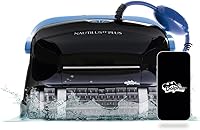
The Dolphin Nautilus CC Plus Wi-Fi adds always-on Wi-Fi so you can schedule cleanings from your phone.
The bodies are built from plastic to keep weight down. A model like the Nautilus CC Plus Wi-Fi measures about 22.2 inches long, 17.6 inches wide, and 12.9 inches high and weighs 34.6 pounds.
The CC Pro Wi-Fi is lighter at 16.5 pounds, while the Proteus DX3 comes in at 14.8 pounds. Lighter bodies are easier to lift out at the end of a run.
How does a robotic pool cleaner move around the pool?
It drives on motorized tracks and changes direction on its own. The cleaner doesn't follow a set track like a toy car.
Instead, it bumps, turns, and crosses the pool in overlapping passes so most of the floor gets covered.
When it reaches a wall, the brushes grip and the tracks pull it upward. It climbs to the waterline, releases, and drops back to the floor to start a new pass.
The pattern isn't perfectly neat, but over a full cycle the unit works its way around the pool.
Some models climb any surface, whether plaster, vinyl, or fiberglass. The Dolphin Nautilus CC Plus Wi-Fi climbs walls no matter the pool's shape or surface type.
If your pool has a fiberglass shell, our guide to robotic pool cleaners for fiberglass pools covers models built for that surface.
The drive system is self-propelled on the models here, so the cleaner moves under its own power rather than being pushed or pulled by water. You don't steer it during a run.
The bump-and-turn pattern does the navigating.
How does a robotic pool cleaner filter the water?
Water enters the cleaner, passes through a basket or cartridge, and returns clean. The pump motor creates suction at the intake underneath the body.
Debris and water get pulled in together.
The filter traps leaves, sand, and fine dust. Clean water flows back into the pool through the top or sides.
The basket is the only place the dirt collects, so it never goes to your pool filter or skimmer.
Because the cleaner has its own filter, it keeps working even when the pool pump is off. That's a real difference from suction and pressure cleaners, which borrow the pool's pump to move water.
A robotic unit runs as a separate machine.
The basket design matters for how often you'll handle it. A top-load basket lifts straight out of the top of the body, so you empty it without reaching into the water or tipping the whole unit.
All three models in this guide use that top-load layout.
How does a robotic pool cleaner climb walls and the waterline?
Brushes and tracks grip the surface while water flow helps hold the body against it. The spinning brushes scrub as they pull the unit upward.
The tracks keep contact so the cleaner doesn't slide back down.
At the top, the unit releases from the wall and drops to the floor. It then moves to another section and climbs again.
Over a cycle, it reaches most of the wall and tile band.
Not every model cleans the waterline. The Dolphin Nautilus CC Pro Wi-Fi has a waterline scrubber brush, so it handles the tile ring as it climbs.
A model without that brush will clean the walls but leave the waterline to you.
The brush type also changes how much scrubbing the walls get. An active scrubbing brush spins against the surface to loosen film and debris rather than just gliding over it.
The CC Pro Wi-Fi and the Proteus DX3 both use an active scrubbing brush. The CC Plus Wi-Fi relies on its climbing scrubber brush as it works the wall.
What happens after a robotic pool cleaner finishes a cycle?
It stops on its own, and then you lift it out and empty the basket. Most units run a set cycle, often around 2 hours, and shut off when the time is up.
You don't need to watch it.
Pull the cleaner out by the handle and let the water drain. Open the top-load basket and empty the debris into a bin.
Rinse the basket with a hose, then put it back. A clogged basket weakens suction, so empty it after every run.
The Dolphin Nautilus CC Plus Wi-Fi cleans a pool in about 2 hours and has a top-load basket you remove without tools. That quick routine is the main upkeep a robotic cleaner asks of you.
All three models here run a cycle in roughly 2 hours. That's short enough to run in the morning before you swim or in the evening after everyone is out of the pool.
The unit powers down when the cycle ends, so nothing keeps running until you come back for it.
Do you still need to brush and vacuum the pool by hand?
Mostly no, but a robotic cleaner doesn't replace every pool task. It handles the floor, walls, and often the waterline.
It filters fine debris as it goes.
For most pools, that covers the regular cleaning.
You'll still skim the surface for floating leaves, and you'll still test and balance the water. Large debris like branches should come out first so the basket doesn't jam.
Steps and tight corners may need a quick touch-up.
If you're new to running one, our walkthrough on how to vacuum a pool with a robotic cleaner covers setup and a full cycle from start to finish.
Which robotic pool cleaner fits your pool?
The right pick depends on pool size, surface, and how much you want to schedule from your phone. Match the cleaner's stated pool length to yours, then decide which features matter.
Which model suits most inground pools?
The Dolphin Nautilus CC Plus Wi-Fi is the strongest all-round pick. It's built for inground pools up to 40 ft in length and climbs walls on any surface type.
Always-on Wi-Fi lets you schedule cleanings from anywhere.
A 2-hour cycle means a run fits easily into a morning. Its top-load basket comes out for rinsing without fuss.
For a wider field of choices, see our roundup of inground robotic pool cleaners.
Which model adds waterline scrubbing for larger pools?
The Dolphin Nautilus CC Pro Wi-Fi covers inground pools up to 50 ft and adds a waterline scrubber brush. Its active scrubbing brush works the walls and floor while staying gentle on the surface.
Wi-Fi scheduling works the same way here. The extra length and the waterline brush make it the pick for bigger pools where the tile ring collects a film.
It's also lighter than the CC Plus, which helps when you lift it out. It's plug-and-play, so you plug it in, drop it in the water, and start it from the app.
Which model is the budget-friendly choice?
The Dolphin Proteus DX3 keeps the core features at a lower cost. It climbs walls and uses an active scrubber brush on any surface.
It's built for inground pools up to 33 ft.
It runs a cycle in about 2 hours and has the same top-load basket for easy emptying. The trade-off is the shorter pool length and no Wi-Fi scheduling.
It uses a remote for control. If your pool is smaller and you don't need app control, it does the same core cleaning job.
Shoppers watching the budget can also browse robotic pool cleaners under 500 dollars.
How does a robotic pool cleaner compare with other cleaner types?
A robotic cleaner runs on its own power and filter, while suction and pressure cleaners rely on the pool pump. That's the main difference, and it changes how each one works.
A suction cleaner connects to the skimmer and uses the pump's pull to crawl the floor. A pressure cleaner uses water pushed back into the pool to drive it and to stir up debris into a bag.
Both stop when the pump stops.
A robotic unit carries its own motors and basket, so it works while the pump rests. It also scrubs with brushes rather than just stirring debris.
The setup is simpler: plug in, drop in, start. That self-contained design is what "how does a robotic pool cleaner work" really comes down to.
The power supply is a key part of that difference. It converts household current to the low voltage the cleaner's motors use, so the unit stays safe in the water.
You can leave the cleaner plugged into an outdoor outlet while the pool pump sits idle. That's why a robotic cleaner and your pump never compete for the same plumbing.
Frequently asked questions
Does a robotic pool cleaner need to be hooked up to the pool pump?
No. A robotic cleaner has its own motor and filter, so it runs on household power and never touches the pool's pump or plumbing.
You plug the power supply into an outlet, drop the cleaner in the water, and let it run.
That independence is why it keeps working even when the pool pump is off.
Where does the dirt go inside a robotic pool cleaner?
Debris and water get pulled into a filter basket or cartridge inside the cleaner body. The basket traps leaves, sand, and fine dust while the water flows back into the pool.
You lift the basket out, rinse or empty it, and put it back.
A full basket cuts suction, so empty it after each run.
Can a robotic pool cleaner run without anyone watching it?
Yes. Most models run on a set cycle, often about 2 hours, and shut off on their own when the cycle ends.
You can start a run and walk away.
Just pull the cleaner out and empty the filter basket afterward, because it won't empty itself.
Does a robotic pool cleaner scrub the waterline?
Many models do. The Dolphin Nautilus CC Pro Wi-Fi has a waterline scrubber brush, so it cleans the tile band as it climbs.
Not every model reaches the waterline, so check that feature if the ring around your pool is a problem area.
The floor and walls are the standard coverage.