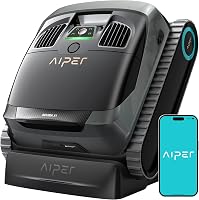
Aiper Scuba V3 Pool Cleaner Review: Worth It? (November 2026)
The Aiper Scuba V3 is worth buying if you want a cordless robot that finds debris on its own and parks itself at the waterline. Its AI camera, wireless dock and 3-micron filter layer make daily cleaning close to hands-free. Skip it if your pool needs scrubbing power more than navigation smarts.
On this page (8 sections)
The Aiper Scuba V3 is a smart buy for pool owners who want cleaning to happen without a routine. Its single front-facing camera spots over 20 debris types and steers the robot straight at them, and the robot parks at the waterline when the cycle ends so you can lift it out without wading.
This Aiper Scuba V3 review weighs those conveniences against the one thing it doesn't do as well as a brushed rival.
The V3 sits in the premium cordless tier. It's worth the price tier if navigation and self-parking save you time every week.
If your main problem is film clinging to the walls, the scrubbing robot further down this page fits better.
The Aiper Scuba V3 at a glance
The Scuba V3 is a camera-guided cordless robot with a wireless dock, built to take the cable and the retrieval chore out of pool cleaning. Aiper says the AI Patrol system cleans up to ten times faster than traditional methods by cutting unnecessary movement.
Aiper AI Vision Cordless Pool Robot: Best for hands-off daily cleaning

- Single front-facing AI camera
- Up to 180 minutes in Auto, Floor, Wall and Waterline modes
- 3-micron ultra-fine filter layer
- No-installation wireless charging dock
- 18.1 lb body
A camera-guided cordless robot that steers straight to debris and parks at the waterline when it finishes. The wireless dock removes the cable and the daily retrieval chore.
Pros
- AI camera detects over 20 debris types
- Returns to the waterline and sends an app notification
- 3-micron layer traps sand and fine dirt
- Wireless charging dock needs no installation
- Light enough at 18.1 lb for one person to lift out
Cons
- No scrubber brush described for stubborn algae
- Premium price tier for a cordless robot
- Dock takes up deck space near the pool
Our score weighs specs, features and buyer feedback against what you're shopping for. An 8.3 reflects strong navigation and filtration, held back slightly by the lack of a described scrubbing brush and the premium tier.
Who the Scuba V3 suits
Buy the Scuba V3 if you want the robot to do the deciding and you'd rather not plan a cleaning schedule. The AI camera means you don't have to run a full cycle just to catch a few leaves; it goes to the debris and gets on with it.
It also suits anyone who dislikes reaching into the pool. The waterline parking and app notification mean you lift the robot from the edge, not from the deep end.
Skip it if your pool walls grow a stubborn film or algae. The V3 cleans walls and the waterline, but the product data describes no active scrubbing brush.
A robot with a brush is the safer pick when wall film is your recurring problem.
It's also a stretch for a very small above-ground pool. The navigation smarts matter most in a pool with varied debris patterns and more than one cleaning zone.
Specs that matter in daily use
Runtime and modes set the rhythm of your week. Aiper says the V3 runs up to 180 minutes in Auto, Floor, Wall and Waterline modes.
Eco Mode extends that to about 240 minutes for light daily upkeep.
The AI camera is the headline feature. It detects over 20 debris types and navigates directly to them, so a cycle is spent cleaning rather than covering the same water twice.
Aiper also offers an AI Navium Mode that builds a weekly plan from pool size, weather and cleaning history. Aiper says that plan runs 7 days on one charge.
Filtration is the other spec worth your attention. The MicroMesh system combines a 180-micron debris filter with a 3-micron ultra-fine layer.
That fine layer is what catches sand and the particles that keep water cloudy.
The body weighs 18.1 lb and measures 17.5 by 15 by 8.6 inches. Aiper compares the weight to a large housecat, and that's the point: one person can lift it over the coping without strain.
Capacity is 3.5 liters, enough for a normal debris load without constant emptying.
Aiper lists TÜV-certified data privacy for the camera, which matters if you're uneasy about a camera in the pool. The body is rated IPX8, so it's built to sit underwater.
Setup and the wireless dock
Setup is short because there's no cable to run. Aiper says the wireless charging dock needs no installation: you place the robot on it and charging begins without exposed connectors or a drying step.
A full charge takes about 4 hours.
Put the dock on a flat, stable spot near the pool where the cord won't become a trip hazard. The dock also stores the robot between cleans, so you don't need a shelf or a bin in the garage.
Pair the robot with the Aiper app before the first run. That's where you pick Eco Mode or a full Auto cycle and where the cleaning notifications arrive.
If you want help with the general routine, our guide to how to vacuum a pool with a robotic cleaner walks through a full cycle.
Drop the robot in and let it work. When the cycle ends, it returns to the waterline and stays there for 10 minutes, then sends a notification.
Lift it out, rinse the filters and set it back on the dock.
The first week is the time to watch how it handles your pool's shape. Note where it spends time and whether the waterline parking spot is easy to reach from your deck.
Care and maintenance between cycles
Routine care is mostly about the filters and the dock contacts. Rinse the 180-micron layer and the 3-micron layer after each cycle, since a clogged fine layer cuts suction and makes the robot work harder.
Empty the 3.5-liter basket before it fills. A packed basket leaves debris in the water and can strain the motor.
A quick rinse under a hose is enough for most loads.
Wipe the robot body and let it dry before it goes back on the dock. The wireless dock avoids exposed connectors, but a clean, dry robot still charges more reliably.
Check the brushes and the treads for hair and twine. Wrapped hair reduces grip on the walls and waterline, which is where the V3 does some of its most useful work.
Store the robot on the dock rather than in a shed. Aiper designed the dock as the storage spot, and keeping the robot there means it's charged and ready when you are.
If the app stops sending notifications, check the robot's placement on the dock first. A robot that isn't seated squarely won't charge, and a flat battery is the most common reason a scheduled clean doesn't run.
The trade-offs to know before you buy
The biggest trade-off is scrubbing power versus navigation. The V3's strength is finding debris and covering the pool efficiently.
The product data describes dual brushes and JetAssist scrubbing, but no active scrubber brush built for wall film.
That makes it a weaker fit for a pool that grows algae on the walls. A brushed robot does that job with less help from you.
The cordless design has a second cost: runtime limits. Aiper's 180-minute Auto cycle is generous for most residential pools, but a very large pool may need more than one cycle or a mid-week top-up.
The premium tier is the third consideration. You're paying for the camera, the AI plan and the wireless dock.
If a plain corded robot and a weekly manual cycle would suit you, the extra spend buys convenience more than raw cleaning muscle.
Finally, the dock needs deck space near the water. That's a small footprint, but it's still a permanent spot you should plan for before the robot arrives.
Alternatives worth a look
Two other robots on this site cover the jobs the V3 handles less well. One adds sensors and a schedule, and the other brings a wall-scrubbing brush.
Aiper Scuba S1: the scheduled, full-coverage option
The Scuba S1 is the sensor-driven choice for set-and-forget cleaning. It uses 11 high-precision sensors and a WavePath pattern to cover the pool with less overlap, and Aiper says it cleans four zones including shallow areas above 12 inches.
Its replaceable 3-micron filter matches the V3's fine filtration, and Eco Mode stretches runtime to 270 minutes. The weekly custom cleaning plan in the app means you don't have to start each cycle yourself.
Aiper backs it with a 2-year warranty. Read the full Aiper Scuba S1 robotic pool cleaner review for the details.
Dolphin Nautilus CC Plus: the wall-scrubbing option
The Dolphin is the pick for pools with visible wall film. Its active scrubbing brush works on walls and the floor, and the top-load basket makes emptying simple.
Aiper's camera navigation is smarter, but the Dolphin's brush does the physical work on stubborn surfaces.
It's built for in-ground pools up to 40 ft long and runs a cycle in about 2 hours. The catch is the cord: the cable stays in the water during cleaning, and there's no app control or self-parking.
If a cable doesn't bother you and walls are your problem, it's the stronger cleaner.
If you're still deciding whether any robot earns its price, our piece on whether robotic pool cleaners are worth it lays out the math. Shoppers on a tighter budget can start with the robotic pool cleaners under 500 instead.
Verdict: buy the Scuba V3 for hands-off cleaning
Buy the Aiper Scuba V3 if you want a cordless robot that finds debris on its own and parks itself for pickup. The AI camera, the weekly AI plan and the wireless dock turn pool cleaning into a chore you barely notice.
The 3-micron filter layer keeps the water clear between cycles.
Pick the Aiper Scuba S1 instead if you want sensors and a weekly schedule that covers shallow areas and steps. Pick the Dolphin Nautilus CC Plus if wall film is your recurring problem and you don't mind a cord.
The Scuba V3 wins for most pool owners who value low effort over scrubbing muscle.
Before you order, check the exact dock dimensions against your deck space and confirm the waterline parking spot is reachable from the edge.
Frequently asked questions
How long does the Aiper Scuba V3 run on one charge?
Aiper says the Scuba V3 runs up to 180 minutes in Auto, Floor, Wall and Waterline modes. Eco Mode extends that to about 240 minutes for light daily maintenance.
A full charge takes about 4 hours on the wireless dock.
Does the Scuba V3 climb walls and clean the waterline?
Yes. Its wall and waterline mode takes the robot up the pool sides and along the tile line.
It also parks at the waterline for 10 minutes when a cycle ends so you can lift it out without wading in.
Do I need to install anything for the wireless charging dock?
No. Aiper says the dock needs no setup: you place the robot on it and charging starts without exposed connectors.
The dock also stores the robot between cleans, so you don't need a separate storage spot.
What kind of debris does the Scuba V3 filter catch?
The MicroMesh system pairs a 180-micron debris filter with a 3-micron ultra-fine layer. That second layer is what traps sand and fine particles that coarser baskets let through.
Rinse both layers after each cycle for the best suction.
Is the Aiper Scuba V3 good for a first robotic cleaner?
It's a strong first robot if you value low effort over scrubbing muscle. The self-parking waterline return and app notification mean you rarely touch the robot beyond lifting it out.
If your pool grows algae film on the walls, a robot with a brush suits you better.
What warranty does Aiper give the Scuba V3?
Aiper backs the Scuba V3 with a 2-year product care plan that includes advance replacement. Support runs 24/7, and Aiper lists 20 global service centers.
Keep your order details handy in case you need a replacement unit.