How to Fix a Hayward Pool Cleaner
To fix a Hayward pool cleaner, start with the three things that stop most units: low suction, a clogged turbine and worn roller skirts. Clear the hose and filter basket, check the flow, then look at the cleaner's moving parts before you buy a replacement.
On this page (8 sections)
- What should you check first when a Hayward cleaner stops working?
- How do you clear a clog in the hose or turbine?
- Why does a Hayward cleaner keep flipping over or stalling?
- How do you check and adjust the roller skirts and wheels?
- What causes weak suction at the cleaner head?
- When should you replace parts instead of the whole cleaner?
- Which Hayward cleaner fits your pool if repairs aren't worth it?
- How do you keep a fixed Hayward cleaner running?
To fix a Hayward pool cleaner, start with the three things that stop most units: low suction, a clogged turbine and worn roller skirts. Clear the hose and filter basket, check the flow, then look at the cleaner's moving parts before you buy a replacement.
Most Hayward suction cleaners run on your existing pump and filter, so the fault often sits in the pool's plumbing rather than the cleaner itself. Work through the checks in order and you'll usually find the problem within an hour.
What should you check first when a Hayward cleaner stops working?
Check suction and water flow first. A Hayward suction cleaner only moves when your pump pulls enough water through it, so weak flow is the most common reason a unit stalls.
Start by cleaning the pump basket and the skimmer basket. A half-full basket cuts flow to the cleaner and leaves it parked in one spot.
Then look at the filter; a dirty cartridge or a backwash-due sand filter drops pressure at the cleaner head.
Feel the pull at the cleaner's mouth with your hand while the pump runs. You want a firm, steady draw, not a weak trickle.
If the pull is weak, the issue is upstream in the pump, filter or hose.
Also check that the cleaner is connected to the suction port or skimmer the way the setup calls for. A loose hose end or a missing regulator valve lets air in and kills the suction.
Once flow is strong and steady, most "broken" cleaners start moving again.
How do you clear a clog in the hose or turbine?
Disconnect the hose and check each section for debris. Leaves, twigs and fine grit collect in the hose and in the turbine vanes, and either one can stop the cleaner cold.
Lift the hose out and look through it section by section. A garden hose flush or a long flexible brush clears most blockages.
Reconnect the sections firmly so they don't pull air.
Next, look at the cleaner head. Hayward's Poolvergnuegen models use patented self-adjusting turbine vanes that are designed to pass larger debris without clogging.
Even so, hair and grit can wrap around the turbine and slow the wheels. Remove the top housing if your model allows it, then pick out the debris by hand.
Don't force the turbine to spin with a tool. If it won't turn freely after cleaning, a worn bearing or a damaged vane is the likely cause, and that's a part replacement rather than a cleaning job.
Why does a Hayward cleaner keep flipping over or stalling?
Flips and stalls usually trace back to flow, tires or debris weight. A cleaner that rolls onto its side or freezes in place is telling you something about balance or grip, not necessarily a broken motor.
Start with the tires. Hayward's Poolvergnuegen models have patented tire treads for climbing and obstacle maneuverability.
Worn or slick treads lose grip on walls and main drains, so the cleaner slides and flips. Replace the tires when the tread pattern is gone.
Check the roller skirts too. The adjustable roller skirts are meant to keep suction on uneven surfaces.
A skirt that's bent, cracked or set too high breaks the seal and lets the cleaner lose its grip.
Finally, weigh the debris load. A cleaner trying to drag a heavy pile of leaves can stall.
Empty the baskets more often during leaf season. Our guide to a pool cleaner that keeps flipping over covers the balance and hose-length fixes in more detail.
How do you check and adjust the roller skirts and wheels?
Set the skirts so they sit close to the surface without dragging. The adjustable roller skirts on the Poolvergnuegen models maintain suction on uneven floors, but only when they're set right.
With the pump off, look under the cleaner. The skirt should clear the pool floor by a small gap, enough to keep the seal without scraping.
If a skirt is bent or cracked, replace it; a broken skirt can't hold suction.
Spin each wheel by hand. They should turn freely and the internal steering should still move.
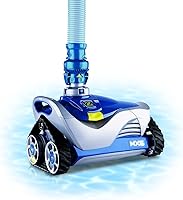
Hayward's 4-wheel unit uses pre-programmed steering sequences that periodically reverse the left wheel to change direction. A wheel that binds or a steering gear that's jammed stops the pattern and leaves the cleaner circling one area.
Clean sand and grit out of the wheel wells, since grit wears the axles and stiffens the spin. If a wheel still binds after cleaning, the axle or bearing needs replacing.
What causes weak suction at the cleaner head?
Weak suction at the head usually means a restricted line, an air leak or a pump problem. The cleaner can only pull what the pump delivers, so trace the flow backward from the head.
Check the hose first. A cracked hose section, a loose cuff or a hose floating on the surface lets air in.
Submerge each section fully as you reconnect it so no air pockets remain.
Then check the regulator valve and any in-line screen. A clogged screen or a valve set wrong chokes the flow.
Hayward's TracVac kit includes a regulator valve, a flow gauge and a hose cone adapter to help set the flow correctly.
Look at the pump basket O-ring and the filter pressure gauge. A worn O-ring sucks air, and a gauge reading far above normal means a dirty filter.
Clean or backwash, then recheck the pull at the head. If suction is still weak, the pump itself needs a look.
When should you replace parts instead of the whole cleaner?
Replace parts while the body and turbine housing are sound. Hoses, tires, roller skirts, bearings and the regulator valve are normal wear items, and swapping them is far cheaper than a new cleaner.
Hayward's cleaning instructions are simple: rinse the cleaner with clean water after each use, clean the filter regularly and store it in a cool, dry place. That routine slows wear on the skirts and tires.
Sun damage and grit do the most harm, so don't leave the unit in the pool between runs.
Replace the whole cleaner when the body is cracked, the turbine housing is damaged or repairs have piled up past the cost of a new unit. A cleaner that's had two hose replacements and a skirt set in a season is a candidate for replacement.
Before you buy, confirm the model's pool size rating. A 2-wheel unit rated for pools up to 16 x 32 ft. works hard in a 20 x 40 ft. pool, and that strain shows up as constant stalling.
Our roundup of suction side pool cleaners compares the size ratings.
Which Hayward cleaner fits your pool if repairs aren't worth it?
Match the cleaner to your pool size first, then pick the body style. A correctly sized cleaner stalls less, so a replacement is the better call when your current unit is undersized for the pool.
The 4-wheel Poolvergnuegen suits larger pools and pools with deep ends. Its adjustable roller skirts keep suction on uneven surfaces, and its steering sequences send it 11 to 14 feet before turning.
If you want to compare it against another wheeled design, our Zodiac MX6 review covers a rival option.
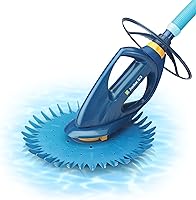
The 2-wheel model turns every 8 to 10 feet and covers floors, steps and the waterline. It's the simpler fit for a modest pool where a 4-wheel unit would be overkill.
TracVac uses rugged tracks instead of wheels to climb obstacles and works on concrete, fiberglass, vinyl and tile. Its kit includes an adjustable hose, float, regulator valve and hose clip.
If you're assembling a wheeled model instead, our guide to how to assemble a Zodiac G3 pool cleaner walks through the hose and head steps.
How do you keep a fixed Hayward cleaner running?
Run a short weekly check so small faults don't turn into stalls. Empty the baskets, rinse the cleaner and glance at the skirts and tires before each run.
Clean the filter on schedule and keep the water chemistry in range. Scale and debris shorten the life of the turbine and the steering gears.
Store the cleaner out of the sun between uses.
Check the hose for cracks each month and keep the sections fully submerged. A cracked hose is the easiest fix to miss and the most common cause of weak suction.
If the cleaner still won't move after all these checks, the pump or the suction line is the likely culprit. Test the suction port with your hand; weak pull there means the pool's plumbing needs attention, not the cleaner.
Learning how to fix a Hayward pool cleaner comes down to order: flow first, debris second, wear parts last. Work through those steps and most units come back to life without a trip to the store.
Frequently asked questions
How do I know if my Hayward cleaner has enough suction?
A quick hand test at the cleaner's head tells you. If you feel weak pull or the unit sits still in one spot, the flow is too low.
Check the pump basket, filter and hose for air or debris before blaming the cleaner itself.
Can I run a Hayward suction cleaner without the filter pump running?
No. Suction cleaners are hydraulic powered, so they need the pump pulling water through the skimmer or suction port.
With the pump off, the unit just sits still.
Start the pump and confirm normal flow before you drop the cleaner in.
How long should a Hayward Poolvergnuegen last?
Wear parts like tires, roller skirts and hoses go first, often after a few seasons in a sunny pool. The body and turbine can last much longer with regular rinsing and proper storage.
Replace worn parts as they fail rather than buying a whole new cleaner.
What causes a Hayward cleaner to stop climbing the walls?
Usually not enough flow, slick tires or debris weighing the unit down. Clean the filter, check the hose for leaks and air, and inspect the tire treads.
In a 4-wheel unit, a stuck wheel or worn skirt also reduces the climb.
When should I replace a Hayward cleaner instead of repairing it?
Replace it when the body or turbine housing is cracked, or when repairs cost more than a new unit. If you have replaced hoses and skirts twice and the cleaner still stalls, a new cleaner is the simpler answer.