Beatbot vs Aiper Pool Cleaners: Which Should You Buy? (November 2026)
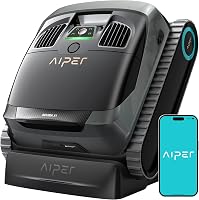
Pick the Beatbot Sora 30 for most pools, and the AIPER Scuba X1 if your pool has walls and a waterline that need scrubbing. In this Beatbot vs Aiper pool cleaners comparison, the Beatbot wins on floor coverage and debris capacity, while Aiper wins on wall reach and filtration.
On this page (10 sections)
- Which pool cleaner wins overall?
- Beatbot Sora 30 vs Aiper Scuba X1 side by side
- Which cleaner covers a large pool floor faster?
- Which one handles walls and waterlines better?
- How much debris will each basket hold?
- Which robot is easier to retrieve and store?
- What about a corded alternative?
- Which Aiper model fits a tighter budget?
- Who should buy which?
- Verdict: which pool cleaner should you buy?
Pick the Beatbot Sora 30 for most pools, and the AIPER Scuba X1 if your pool has walls and a waterline that need scrubbing. In this Beatbot vs Aiper pool cleaners comparison, the Beatbot wins on floor coverage and debris capacity, while Aiper wins on wall reach and filtration.
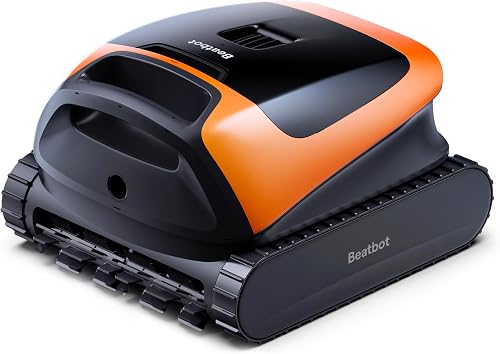
The Beatbot Sora 30 leads with a 6,800 GPH pump and a 5L basket. The Aiper Scuba X1 matches it closely on suction and adds wall climbing.
Choosing between them comes down to the shape of your pool and the debris you fight each week.

Which pool cleaner wins overall?
The Beatbot Sora 30 is the better overall pick for most pool owners. It covers more floor per session and holds more debris, which matters more in a typical rectangular pool than wall scrubbing does.
The Sora 30 runs up to 5 hours on its 10,000 mAh battery. Beatbot says that covers up to 3,229 sq. ft per charge.
That's enough for a large in-ground pool in one session.
The AIPER Scuba X1 runs for 180 minutes. Aiper also packs a 3-micron filter and a wireless charging dock.
On paper its wall and waterline cleaning is the stronger skill, but the Beatbot's larger debris capacity is the bigger day-to-day win.
Both robots are battery powered and app controlled, so neither needs a cord to the pool. The Beatbot weighs in with a 21.6 volt lithium-ion pack rated at 203.04 watt-hours.
The Aiper carries a 16-cell lithium-ion pack at 268.48 watt-hours. That bigger Aiper pack still delivers the shorter runtime, which shows how much the wall climbing and waterline work draw from the battery.
For most readers, the Sora 30 is the robot to buy. The Scuba X1 is the right call when your pool's walls and waterline carry the visible dirt.
If you want to see how the Aiper brand stacks up more broadly, our Aiper vs WYBOT pool cleaner comparison covers that matchup.
Beatbot Sora 30 vs Aiper Scuba X1 side by side
The table shows where each robot leads. Beatbot owns suction, runtime and basket size.
Aiper owns filtration and wall cleaning.
| Product | Best for | Power | Runtime | Filter | Our score |
|---|---|---|---|---|---|
| Beatbot Sora 30 Pool Vacuum Robot | wide pool floors | 6800 GPH | Up to 5 hours | 150 µm | 9.6 |
| AIPER Cordless Robotic Pool Cleaner | walls and waterlines | 6600 GPH | 180 minutes | 3 μm | 9.5 |
The Beatbot's 5L basket means fewer trips to empty it. Its 6,800 GPH pump captures heavy leaves in one pass.
Aiper's 6,600 GPH is close, but its 3-micron filter traps particles far smaller than the Beatbot's 150-micron mesh.
The Beatbot runs on a 10,000 mAh battery and needs about 4.5 hours to charge. The Aiper's dock needs about 4 hours.
Both are close enough that charging rarely decides the purchase.
Wall cleaning is the clear Aiper advantage. The Scuba X1 climbs the wall and cleans 2 inches above the waterline.
The Beatbot stays low and focuses on the floor and shallow areas. The Beatbot does read the pool with dual ultrasonic sensors, though.
A front-facing sensor spots walls and fixtures while a bottom-facing one handles slopes. It navigates around obstacles rather than climbing them.
What each robot does well
The Beatbot is a floor and shallow-water specialist. It cleans ledges and platforms down to 8 inches and uses S-shaped paths to limit repeated passes.
Four motors drive dual-group roller brushes.
The Aiper is a full 4-zone cleaner. It covers the floor, walls, waterline and shallow areas, with dual front PVC brushes for stains.
Its dual jets add a second stream of water to lift sand and pebbles.
Which cleaner covers a large pool floor faster?
The Beatbot Sora 30 covers more floor in one session. Its 5-hour runtime and 3,229 sq. ft coverage beat the Aiper Scuba X1's 180 minutes for a big open pool.
The Beatbot uses S-shaped cleaning paths. Beatbot says the algorithm adjusts routes to reduce repeated passes.
For a long rectangular pool, that means fewer missed strips and less time re-cleaning the same water.
The Aiper's WavePath pattern and 11 sensors keep its routes orderly too. Aiper's adaptive navigation reads the pool layout in real time.
The difference is session length: the Beatbot simply runs longer before needing a charge.
The Beatbot also reads the pool floor for ledges. Its ultrasonic sensors identify platforms and shallow areas so the robot can navigate them without getting stuck.
In a pool with a sun shelf or a built-in bench, that means less manual touch-up after the run.
If your pool is large and mostly flat, the Beatbot is the faster route to a clean floor. If your pool is smaller and you run the robot often, the Aiper's shorter cycle is less of a drawback.
The Beatbot's edge here is why it takes the top spot in this Beatbot vs Aiper pool cleaners matchup.
Which one handles walls and waterlines better?
The Aiper Scuba X1 is the stronger wall and waterline cleaner. It climbs walls and reaches 2 inches above the waterline, where the Beatbot Sora 30 stays on the floor and shallow zones.
Aiper's WaveLine 2.0 technology gives the Scuba X1 60 seconds of sustained horizontal cleaning at the top of the wall. Dual front PVC brushes scrub stubborn stains as it goes.
That's the part of a pool where scum lines show up first.
The Beatbot's dual-group roller brush does solid floor work. Its ultrasonic sensors help it find ledges and platforms rather than climb them.
For a pool with visible wall stains, the Aiper's reach is the deciding feature.
The Aiper's 2-inch reach above the waterline matters more than it sounds. The waterline ring sits right at the top edge of the tile, and a robot that stops at the water surface leaves that band untouched.
The Scuba X1's sustained horizontal pass is built for exactly that strip.
If your walls stay clean and your dirt collects on the bottom, the Beatbot's floor focus is no loss. If you fight a waterline ring every week, Aiper's extra reach pays off.
Readers who also want steps covered should read our guide on which robotic pool cleaner cleans steps.
How much debris will each basket hold?
The Beatbot Sora 30 holds more debris, with a 5L basket against the Aiper's smaller bin. Fewer empties means less hands-in-the-water work each week.
A 5L capacity is generous for a cordless robot. Beatbot says the larger basket means fewer emptying cycles.
For a pool under trees, that difference adds up over a season.
Aiper's strength is the filter, not the size. Its multi-layer system catches debris down to 3 microns.
Fine sand and algae get trapped where a coarser mesh would pass them through. That's a real advantage for cloudy water and fine silt.
The two filters work on different scales. A 3-micron mesh is fine enough to hold the particles that keep water looking hazy.
A 150-micron mesh lets those particles through but holds leaves and larger debris without clogging as fast. A pool with a lot of leaf drop clogs a fine filter quickly, which is where the Beatbot's coarser mesh and bigger basket help.
The trade-off is simple: Beatbot for volume, Aiper for fineness. Pick the Beatbot if you empty a full basket of leaves every run.
Pick the Aiper if your pool water stays hazy with particles too small to see.
Which robot is easier to retrieve and store?
The Beatbot Sora 30 is easier to retrieve, thanks to smart surface parking. The Aiper Scuba X1 is easier to store, because its wireless dock doubles as a stand.
When the Beatbot finishes or its battery drops below 12%, it rises to the surface and parks at the pool edge. It releases internal water so it's light to lift.
One tap in the Beatbot app brings it over, so you don't fish for it with a pole. Beatbot calls this safe for all ages and easy on your back.
The Aiper uses a wireless charging dock. Place the robot on the dock and it charges in about 4 hours.
The dock also keeps the robot off the ground, which is tidier than leaving it on a patio.
The Beatbot's own charging time is 4.5 hours. Both robots are app-controlled, and both come with a 2-year warranty.
Beatbot's app connects over Bluetooth at a range of up to 20m. Neither needs a cord to the pool, so you can move either one between pools without wiring.
What about a corded alternative?
A corded robot like the Dolphin Nautilus CC is the simpler long-term choice if you don't want to manage batteries. It runs from mains power and climbs walls, with no charge cycle to plan around.
The Dolphin Nautilus CC is built for above and in-ground pools up to 33 ft long. It climbs walls and scrubs surfaces as it goes.
Its top-load filter basket lifts out for quick rinsing. Dolphin backs it with a 1-year warranty.
The catch is the cord. You'll manage a cable in the water and need an outlet near the pool.
The Nautilus CC runs on 230 volts and weighs 6.71 kg. Its body measures 22.2 inches long by 17.6 wide by 12.8 high, so it takes up real space when stored.
In return you skip battery limits and charging docks. Dolphin claims a 2-hour cleaning session from its plug-and-play setup.
For a pool that stays in one place all season, that trade often works out well. Our guide on how to vacuum a pool with a robotic cleaner covers the routine either way.
Which Aiper model fits a tighter budget?
The Aiper Scuba S1 2026 is the lower-cost Aiper pick when you still want wall and waterline cleaning. It cleans the floor, walls, waterline and shallow areas above 12 inches.
The Scuba S1 2026 runs up to 180 minutes in Auto, Floor, Wall or Scheduled modes. In Eco Mode through the app, Aiper says it reaches up to 270 minutes.
Its dual filtration pairs a 3-micron filter with a 180-micron standard filter.
It also carries 11 high-precision sensors and an adaptive navigation system. Aiper says its WavePath pattern reduces overlap.
The Caterpillar Treads help it climb and move across zones. Aiper backs it with a 2-year warranty.
Against the Scuba X1, the S1 gives up the 6,600 GPH dual-jet pump and the 3-micron-only filtration. It also gives up the wireless charging dock and the 2-inch waterline reach.
Against the Beatbot, it gives up the 5-hour runtime and 5L basket. What it keeps is full 4-zone cleaning, app scheduling and the longer Eco Mode run.
If budget is the main limit, our list of robotic pool cleaners under 500 is the place to start.
Who should buy which?
Buy the Beatbot Sora 30 if your pool is large and your dirt settles on the floor. Buy the AIPER Scuba X1 if walls and waterlines carry the mess.
The Beatbot suits you when floor coverage and debris volume matter most. A pool under trees, a long rectangle or a wide freeform shape all play to its strengths.
The 5-hour runtime and 5L basket keep you out of the water longer. The surface parking also helps if lifting a wet robot is hard on your back.
The Aiper suits you when wall stains and a waterline ring are the problem. Its wall climbing and 3-micron filter handle both.
Pick it if your pool has visible walls and you want the cleanest possible water. The wireless dock is a bonus for anyone who wants the robot off the patio floor.
The Aiper Scuba S1 2026 suits budget-minded buyers who still want four-zone cleaning. The Dolphin Nautilus CC suits owners who prefer corded power over batteries.
Each pick in this Beatbot vs Aiper pool cleaners guide comes down to where your pool gets dirty.
Verdict: which pool cleaner should you buy?
Buy the Beatbot Sora 30 for most pools, because its floor coverage and debris capacity do more for the average owner. Buy the AIPER Scuba X1 if walls and the waterline are where your pool shows dirt.
The Beatbot wins this Beatbot vs Aiper pool cleaners comparison on the everyday job: covering a big floor in one session and holding more debris. Its smart surface parking also makes retrieval easier, which matters when you run it several times a week.
The Aiper wins when wall cleaning and fine filtration are the priorities. Its 2-inch waterline reach and 3-micron filter are the better fit for a pool with visible stains and hazy water.
The Scuba S1 2026 covers four zones at a lower price tier, and the Dolphin Nautilus CC is the corded option for owners who want no batteries.
Pick by where your pool gets dirty. If the bottom collects the debris, take the Beatbot.
If the walls and waterline do, take the Aiper. Either way, pair the robot with a regular skimming routine and empty the basket after each run for the best results.
Frequently asked questions
Which brand is better for cleaning pool walls?
Aiper is the better choice when walls matter, because the Scuba X1 climbs the wall and reaches 2 inches above the waterline. Beatbot's Sora 30 focuses on the floor and shallow areas, so it suits a pool whose walls stay clean.
Is a cordless robot better than a corded pool cleaner?
A cordless robot is easier to drop in and retrieve, while a corded cleaner like the Dolphin Nautilus CC runs without battery limits. For a large pool with long cleaning sessions, a corded model can still make sense.
How often should I run a robotic pool cleaner?
A typical schedule is a few times a week in swimming season, or whenever leaves and sand build up. The Beatbot Sora 30 covers large floors in one charge, so a couple of weekly runs may be enough for a clean pool.
Do these robots clean pool steps?
The Beatbot Sora 30 identifies ledges and shallow areas down to 8 inches and cleans them. The Aiper Scuba X1 cleans floors, walls and the waterline, so step cleaning depends on how the robot reaches each step.